
The short answer: my current starting price is €4,500 for a 24 to 32-page picture book with roughly 12 to 15 illustrations. A cover-only commission starts at €900. The final quote depends on the actual image plan, complexity, format, schedule, approval stages and the rights the project needs.
“How much does a 32-page book cost?” sounds like a precise question, but page count is only the container. One 32-page book might use twelve principal scenes, with text-led pages and a few small details. Another might introduce a new location, group of characters or full illustration at every turn. They are not the same commission.
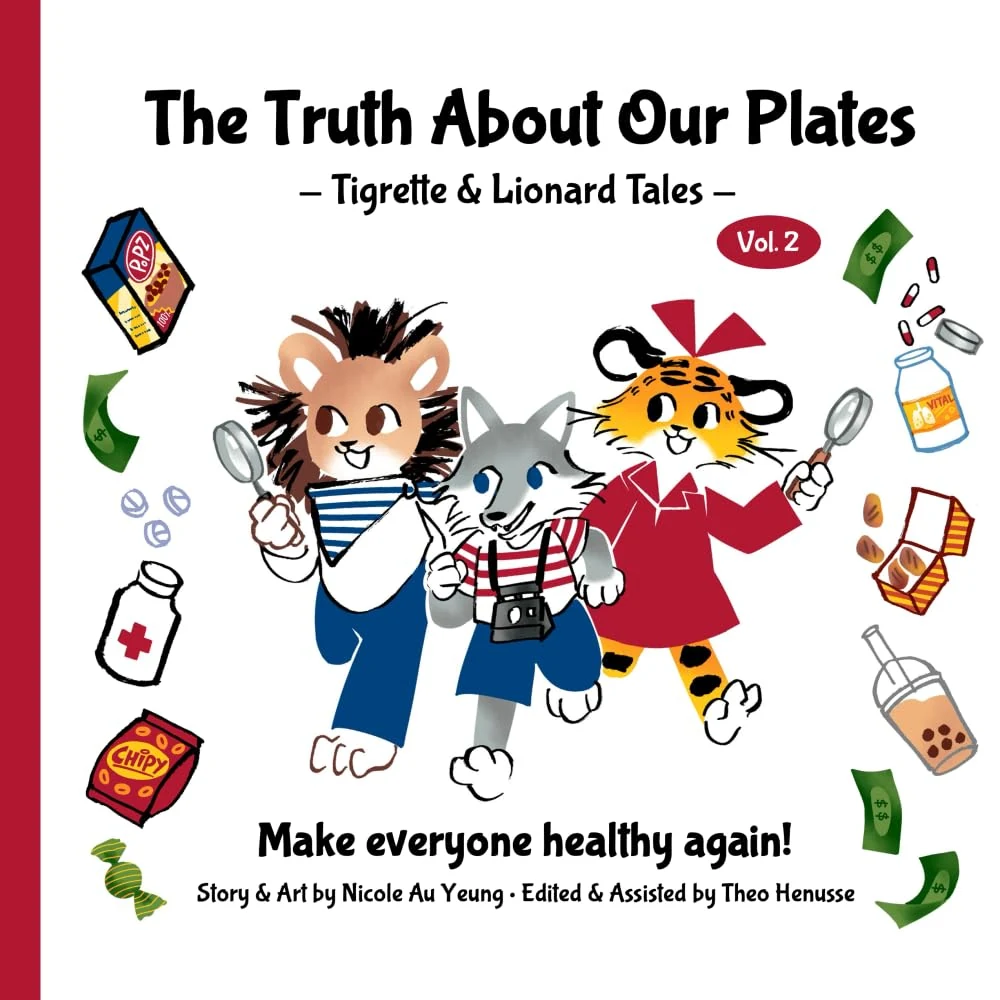
I’ve written, illustrated and self-published two English-language children’s books. Our Species Appropriate Diet: Tiger’s Mystery in Lionland has 48 pages and 48 illustrations. The Truth About Our Plates: Tigrette & Lionard Tales has 51 pages and more than 51 illustrations of different sizes. That first-hand experience is why I plan a book as a visual sequence before treating it as a collection of finished pictures.
Start with an image plan, not a price per page

A page is one side of a leaf. A spread is the pair of facing pages seen when the book is open. A spot is a smaller image that shares its page with text or white space. A full-page picture and a double-page scene carry different compositional demands.
So the useful questions are not simply “How many pages?” and “What is the price per illustration?” They are:
- Which story moments need pictures?
- Which ones deserve a spread or full page?
- Where can the text lead on its own?
- Which characters, costumes, props and locations must remain continuous?
- Does the cover require a separate concept?
A page map or rough storyboard answers those questions. It also prevents a common budgeting problem: agreeing a number of pictures before anyone has worked out what those pictures need to do.
How to count the illustrations in a 32-page picture book
What the illustration budget pays for
Finished artwork is the most visible part of the commission. It is not the whole job.
Before the final images, I read the manuscript for rhythm, character and visual opportunities. Characters and environments need to be developed. The storyboard tests whether the sequence makes sense and whether page turns have enough weight. Sketches settle composition before detailed work begins. Approved images then need to be prepared in the dimensions and file formats required by the book’s production route.
A clear proposal should state which of those stages are included, what will be delivered and when decisions are due. It should also distinguish illustration from editing, typesetting and printing. Those disciplines need to fit together, but they are not automatically the same service.
The main variables behind a quote
Number and type of pictures
Twelve full narrative scenes, four spreads and twenty-four small spots are three very different programmes. A useful quote identifies image types rather than hiding them under one total.
Scene density
An isolated character on an open background is not equivalent to a busy interior, a crowd scene or a location that appears from several angles. Recurring clothes, objects and proportions also need careful continuity across the book.
Research and visual development
A book may call for animal studies, period references, specialist objects or a believable invented world. Research is part of making the images convincing. Character design also needs enough time to work beyond one attractive pose.
Revisions and approvals
The cleanest process approves the storyboard, then sketches, then finished art. Feedback at the agreed stage is normal. A new direction after an approved stage is a change of scope because it can undo work already completed.
Schedule
My own books each involved roughly two months of non-full-time illustration work from storyboard to colour. Editing could then take around a week. Those figures describe my own projects, not a guaranteed client timetable. A book with several decision-makers can spend weeks in storyboard discussion before production moves forward.
The working schedule therefore needs both delivery dates and approval dates. “Published by Christmas” is not yet a production plan.
Usage and rights
Illustration is not normally priced only as labour. The intended use of the artwork matters too. Print, digital editions, translations, territories, duration, promotion and merchandise can require different permissions.
The Association of Illustrators’ commissioning guide advises commissioners to define usage, territory and licence duration when requesting a quote. The Society of Authors’ guidance for author-commissioned illustration also recommends setting out the work, deadline, payment and rights in writing. These details are not administrative clutter. They make the price and the relationship understandable.
What if €4,500 is beyond the available budget?
The constructive option is to change the scope.
You might commission the cover first, choose fewer key scenes, simplify repeated settings or defer non-essential extras. A smaller, coherent image programme is stronger than asking for the full commission while removing the time needed to do it properly.
My €4,500 starting point lets an author decide early whether a 24 to 32-page project with approximately 12 to 15 illustrations is financially realistic. A denser book can still be discussed, but it needs its own image map and quote.
What to send for an accurate first response
The manuscript should ideally be finished. An 80 per cent complete text can be workable only when the remaining revisions have a disciplined schedule. I also need the proposed page count, physical format, readership, publishing route, deadline, decision-makers and available budget.
Visual references are welcome when they show something genuinely useful about atmosphere, material or composition. They are optional. A clear story and production brief are more valuable than a large folder of images that point in conflicting directions.
What to prepare before commissioning a children’s-book illustrator
Frequently asked questions
How much does it cost to illustrate a 32-page picture book?
My starting price is €4,500 for a 24 to 32-page book with approximately 12 to 15 illustrations. More images, denser scenes or broader usage require a project-specific quote.
Is the quotation based on an hourly or per-page rate?
No single hourly or per-page number describes the commission accurately. I quote the agreed image programme, development stages, production requirements, schedule and usage together.
Does the illustration fee include printing?
Not by assumption. Illustration, editing, typesetting and printing are separate parts of book production. The written quotation states exactly what is included.
What does a cover-only commission cost?
A book cover starts at €900. The final brief still needs the format, title treatment, front and back requirements, schedule and intended uses.
Do I need an exact illustration count before contacting you?
No. A stable manuscript and intended format are enough for an initial conversation. A storyboard can then identify spreads, full pages, spots and text-led pages.
Can illustration begin while the manuscript is still changing?
Minor copy edits are different from structural rewriting. A substantial text change can alter every later page, so a finished manuscript is the safest starting point. If it is nearly complete, the remaining decisions need dates and clear ownership.
Why does the licence affect the fee?
A print edition, an ebook, a translation and merchandise are different uses of the artwork. Naming the rights in the agreement ensures the project pays for what it actually needs rather than an undefined promise of every possible future use.
Tell me about the book
Send the manuscript or a secure link, the expected format and page count, your schedule and available budget. I’ll use those details to assess the project and identify the most useful next step.
Introduce a book project
See my published books and narrative sequences