Observation, drawing, materials, tools
My method
Digital tools accelerate image-making. They do not replace the eye, the hand or an understanding of what is being represented.
What distinguishes the way I work?
I combine traditional artistic training with a complete command of contemporary creative tools.
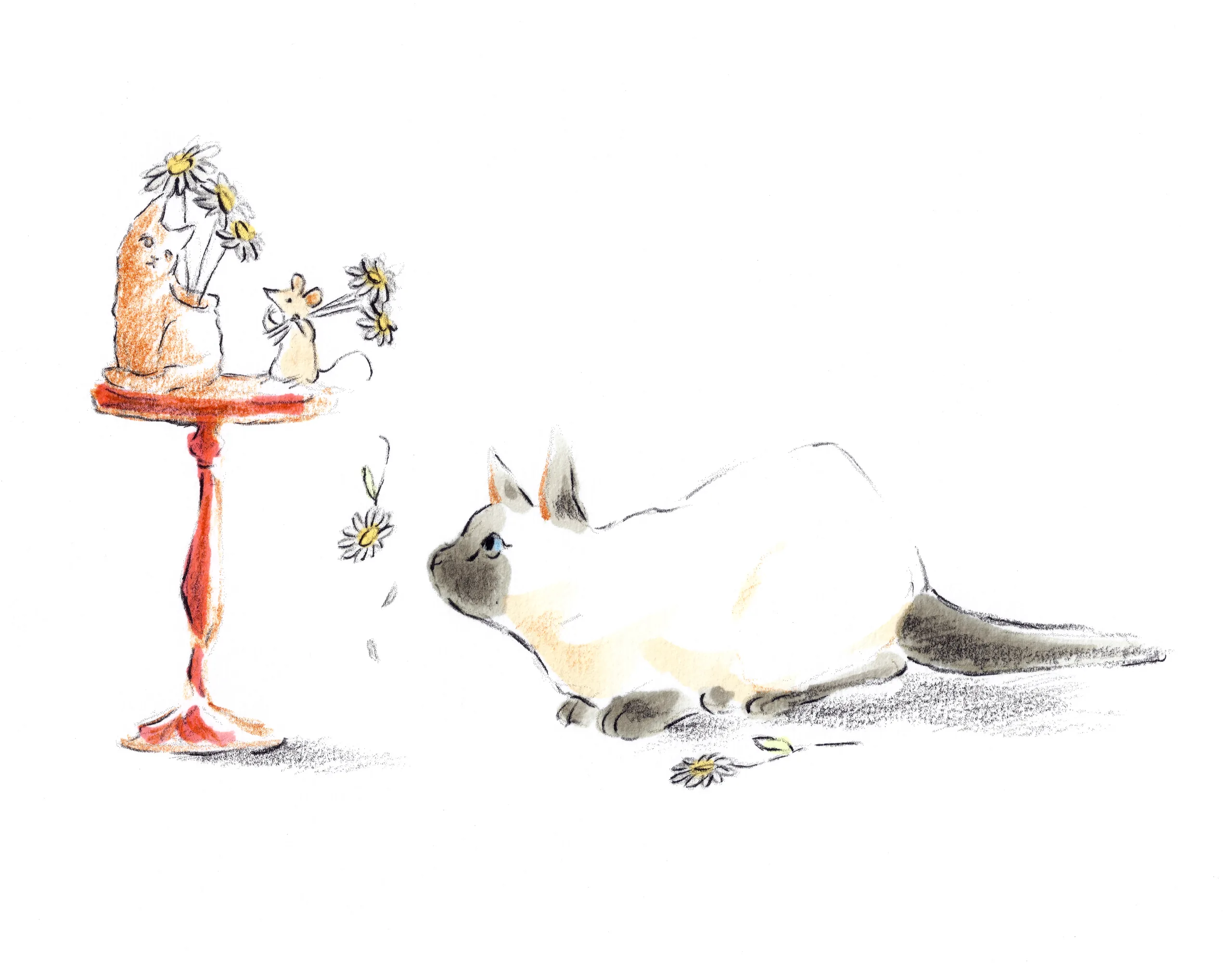
I learned to draw from life, construct figures and understand anatomy, light, perspective, volume and composition. I also trained in visual communication and work with Adobe Illustrator, digital painting and contemporary production methods.
This allows me to choose the visual language that suits the project, rather than one imposed by a tool. An image can be loose or precise, traditional or digital, restrained or highly constructed. In every case, simplification follows understanding.
I do not try to reproduce the past. I seek the artistic intelligence that makes certain images feel alive, then apply it to projects made for today.
Why does drawing remain essential?
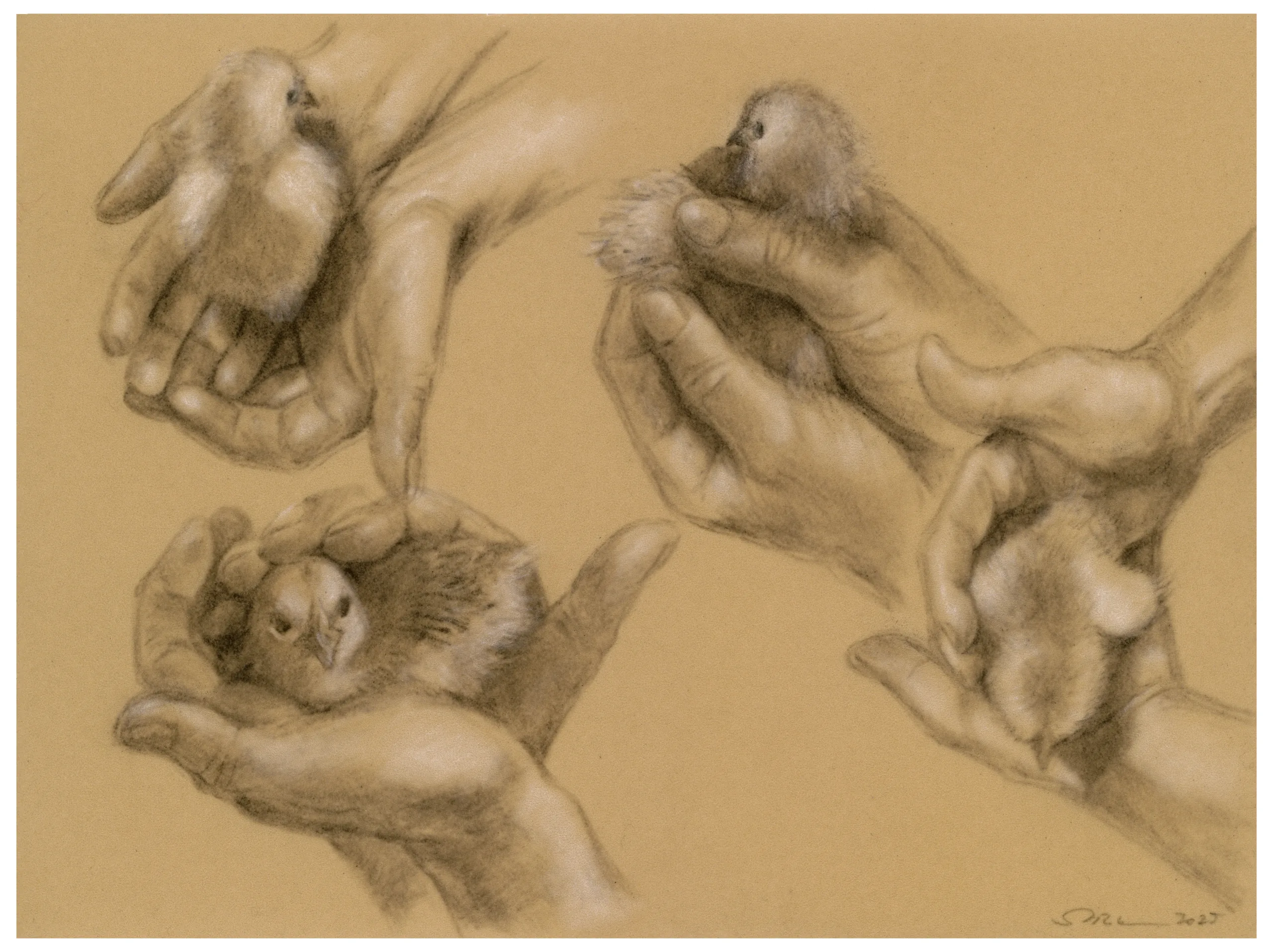
Drawing gives an image its structure, even when the result appears spontaneous or very simple.
A convincing pose requires an understanding of weight and balance. A truthful expression depends on observation. Coherent light reveals volume. Clear composition guides the eye without asking the viewer to think about it.
This invisible work makes free stylisation possible. Without it, simplification quickly becomes a loss of substance. With it, a few lines can convey a gesture, a character or a presence.
Why do some illustrations remain in our memory?
An illustration remains in memory when it does more than occupy the page: it gives the reader a world to enter.
In a children’s book, the image accompanies the story, establishes an atmosphere and rewards repeated viewing. A child should be able to return to it and notice a gesture, texture or detail. Over time, the image may become part of their emotional memory.
This is why the strongest illustrations sometimes live beyond the book as prints, special editions, objects or exhibitions. They possess value of their own. My aim is to create that possibility from the first drawing.
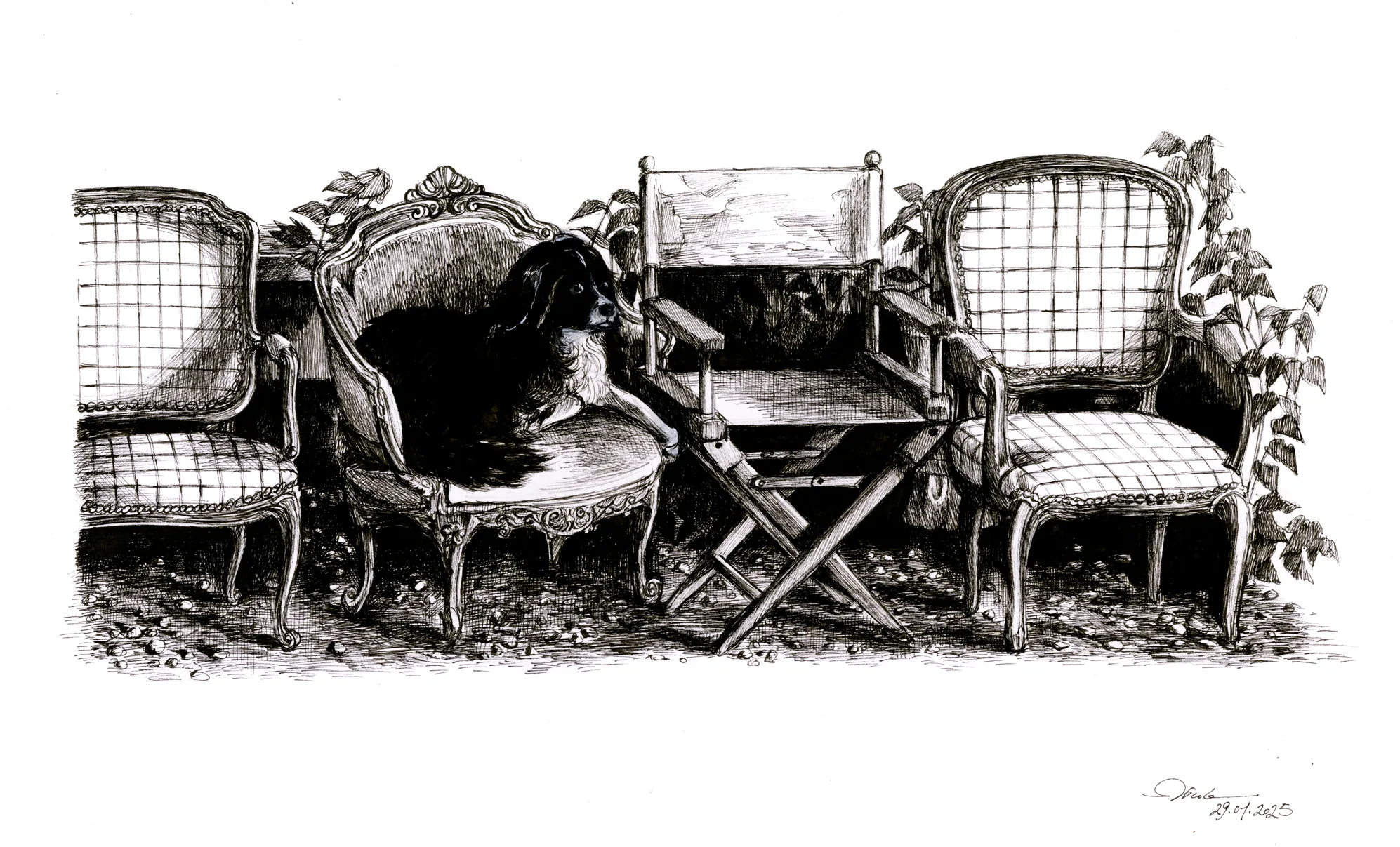
Understanding space and material makes it possible to decide what to retain.
What place do digital tools have in my work?
Digital technology is a creative and production tool that I master, not a substitute for artistic training.
I work in gouache, watercolour, pastel, charcoal and ink. I can then finish an image digitally, paint it on screen, reconstruct it as vector artwork or prepare versions for print and online use.
I do not set traditional and digital methods against one another. They complement each other. The former brings material, chance and the presence of the hand; the latter offers precision, flexibility and efficiency. The project determines their balance.
How does this method apply to a visual identity?
I can build an identity from the real subject of a business, then progressively reduce it into a clear, usable mark.
A factory, landscape, building, machine, animal or product can first be observed and drawn in full. This reveals the proportions, gestures and symbols that genuinely belong to the project.
I then simplify this material into a logo, typography, colours and a system of applications. The brand remains contemporary and practical, but its form has an origin. It was not selected from a catalogue of generic signs.
How does a project with me unfold?
Each project moves from understanding its subject towards a precise form, with clear decision points.
- Understand. We discuss the project, its audience, its use and what should remain in the memory.
- Observe. I gather useful references, study the subject and, where relevant, work from life.
- Construct. I create initial studies of form, composition, character or symbol.
- Choose. We assess the proposal against concrete criteria before refining the chosen direction.
- Finalise. I produce the artwork or graphic system in formats suited to its present and future uses.
Can this approach serve a highly contemporary project?
Yes. Traditional training does not confine me to an old aesthetic; it gives me more choices. I can work in a restrained, vector-based or contemporary register when it serves the project, without losing structure, character or accuracy in the drawing.
What kinds of project suit this method?
This method suits illustrated books, characters, editorial illustration, brand identities and projects intended to live across several media. It is particularly suited to authors, publishers and businesses seeking an image with a presence of its own, rather than a variation on a trend already seen everywhere.